Choosing a healthcare career doesn’t always mean spending five to seven years in medical college. For students who want early job entry, hands-on skills, and real employability, Paramedical Diploma Courses offer a practical and proven path. These programs train you to become the backbone of hospitals, diagnostic labs, and emergency care units—roles that the healthcare system simply cannot function without. At Shiksha Institute, we see students every year who want stability, respect, and growth without unnecessary delays. This guide breaks down everything you need to know—courses, eligibility, fees, salary, and a clear roadmap—so you can make a confident, informed decision.
What These Healthcare Diploma Programs Actually Are
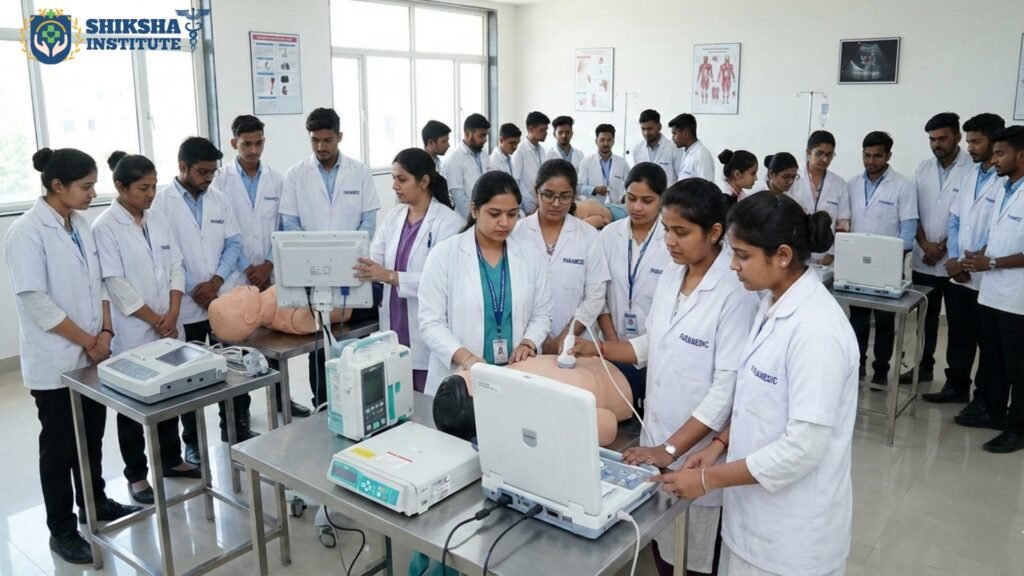
Paramedical diploma programs focus on clinical, diagnostic, and technical support roles in the medical ecosystem. Unlike MBBS or nursing degrees, these courses are skill-centric, shorter in duration, and heavily practical.
You’re not just learning theory—you’re learning:
- How diagnostic machines work
- How to assist doctors and surgeons
- How to handle patients in real clinical settings
Hospitals don’t run on doctors alone. They run on trained technicians, assistants, and specialists—and that’s where these programs fit in.
Why Students Are Choosing This Path Over Traditional Degrees
Let’s be honest. Not everyone wants—or can afford—the long grind of a medical degree. Here’s why students increasingly prefer diploma-level healthcare education:
- Faster career entry (1–2 years vs 5+ years)
- Lower course fees
- High demand in private hospitals
- Job-ready skills
- Opportunities in India and abroad
From a pure ROI perspective, this path makes sense for students who want results, not prestige labels.
Eligibility Requirements (After 10th & 12th)
After 10th
- Passed Class 10 from a recognized board
- Minimum 45–50% marks (varies by course)
- Basic science understanding preferred
After 12th
- Science stream (PCB preferred)
- Some specializations accept PCM
- No national entrance exam required in most cases
This flexibility is one reason Paramedical Diploma Courses attract students from diverse academic backgrounds.
Popular Diploma-Level Medical Specializations
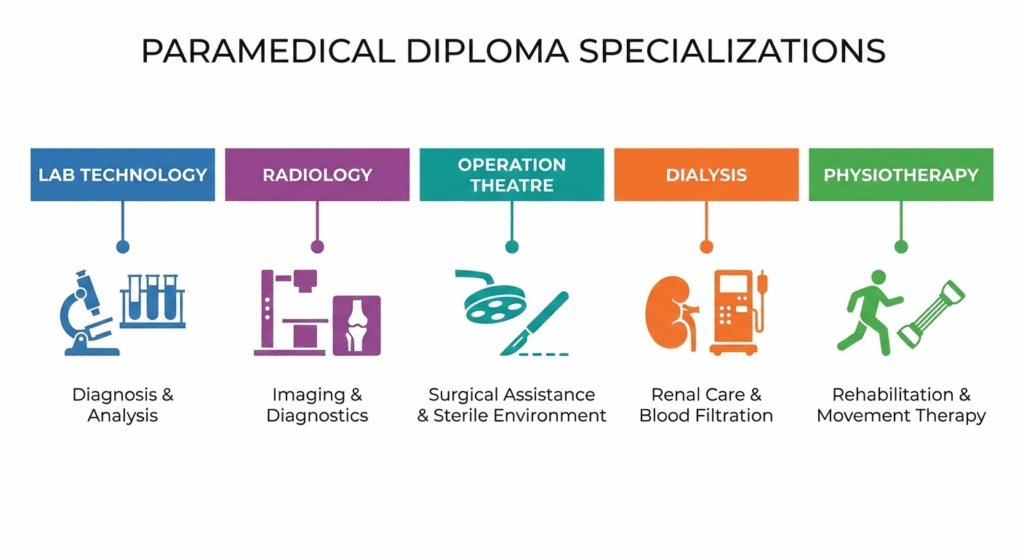
Medical Laboratory Technology (DMLT)
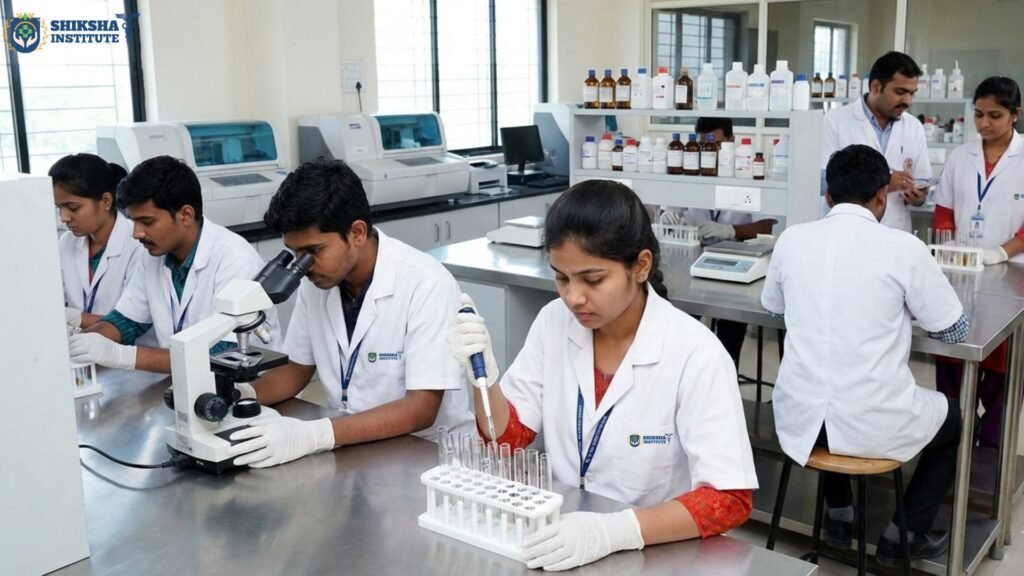
Trains students in blood tests, pathology, microbiology, and diagnostics.
Radiology & Imaging Technology
Focuses on X-ray, CT scan, MRI assistance, and imaging equipment handling.
Operation Theatre Technology
Prepares students to assist surgeons before, during, and after surgeries.
Dialysis Technology
Specialized training for kidney care units and dialysis centers.
Physiotherapy (Diploma Level)
Focuses on rehabilitation, injury recovery, and mobility therapy.
Course Duration and Training Structure
Most programs follow this structure:
- Academic Training: 12–18 months
- Clinical Internship: 6 months
- Total Duration: 1–2 years
This is where students gain real hospital exposure, not just classroom theory.
Fee Structure in India
| Institute Type | Approx Fee Range |
|---|---|
| Government Colleges | ₹20,000 – ₹80,000 |
| Private Institutes | ₹80,000 – ₹2,50,000 |
Fees depend on:
- Infrastructure
- Lab facilities
- Hospital tie-ups
- Location
At Shiksha Institute, transparency in fees is non-negotiable—no surprise costs.
Admission Process Explained Simply
- Choose specialization
- Check eligibility
- Apply directly or through institute counseling
- Document verification
- Enrollment
Most institutes offer merit-based admission. No national entrance exams in most cases.
Skills That Actually Matter in the Real World
Hospitals don’t hire marksheets. They hire competence.
You’ll need:
- Attention to detail
- Patient-handling skills
- Equipment knowledge
- Basic medical ethics
- Calmness under pressure
This is where Paramedical Diploma Courses quietly outperform many theory-heavy degrees.
Career Scope & Employment Areas
Graduates work in:
- Multi-specialty hospitals
- Diagnostic laboratories
- Trauma centers
- Rehabilitation clinics
- Home healthcare services
Job roles include:
Healthcare is recession-proof. That’s not marketing—it’s math.
Salary Expectations in India
| Experience Level | Monthly Salary |
|---|---|
| Fresher | ₹12,000 – ₹20,000 |
| 2–3 Years | ₹25,000 – ₹35,000 |
| Senior Roles | ₹40,000+ |
Diploma vs Degree: A Straight Comparison
| Factor | Diploma | Degree |
|---|---|---|
| Duration | 1–2 Years | 3–5 Years |
| Cost | Low | High |
| Job Entry | Fast | Slow |
| Skill Focus | High | Moderate |
If your goal is early employment, diploma wins. If research or academics matter more, degree may suit you better.
Roadmap: From Student to Healthcare Professional
Step 1: Complete 10th/12th
Step 2: Choose specialization
Step 3: Enroll in recognized institute
Step 4: Finish diploma + internship
Step 5: Get placement or apply independently
Step 6: Gain experience or upgrade skills
Simple. Practical. Effective.
Is this career suitable after 10th?
Yes, many specializations accept students after Class 10.
Are jobs guaranteed?
No institute can “guarantee” jobs—but healthcare demand is consistent.
Can I study further later?
Yes. Lateral entry and degree upgrades are possible.
Conclusion
If you want a career that combines skill, stability, and respect, Paramedical Diploma Courses deserve serious consideration. They’re not shortcuts—they’re smart routes into healthcare. At Shiksha Institute, our focus isn’t just enrollment; it’s employability. Choose wisely, train seriously, and healthcare will always have room for you.